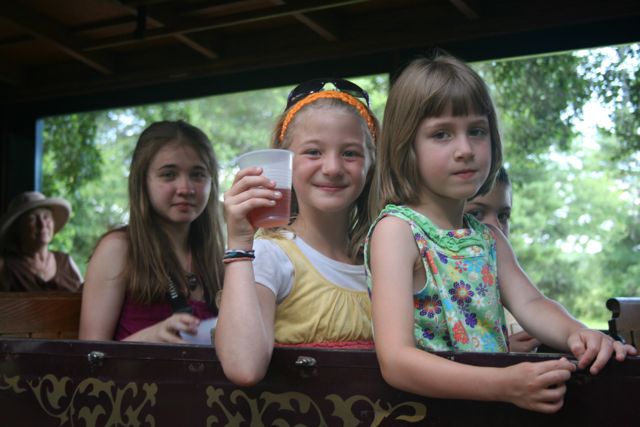
 No vacation would be complete unless it involved some sort of agri-tour. So for our trip to South Carolina this week, I was delighted that I wasn’t even the one who had to suggest it.
My brother-in-law wanted to go to the Charleston Tea Plantation, which bills itself as America’s only tea garden.
I’m thinking it’s probably the largest tea farm in the United States. But I suspect there are smaller growers.
Indeed, Big Island Tea in Hawaii is a hand-picked operation, employing sustainable ag practices.
But I digress…
I’m not a huge tea drinker, yet I found the tour (on a decommissioned Philadelphia trolly bus) to be fascinating.
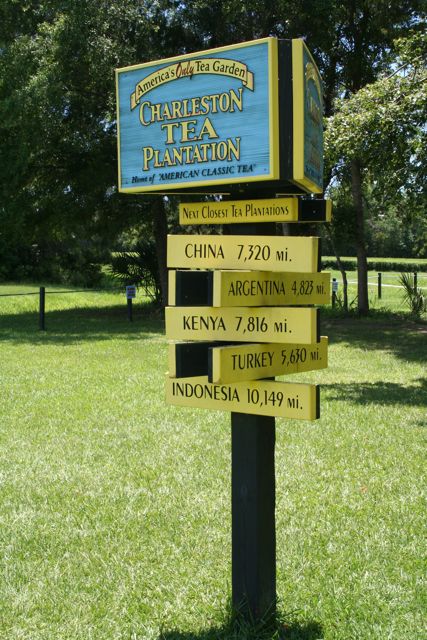 Turns out the plantation’s tea plants are direct clones of a tea operation started up not far from Charleston, first in an experimental U.S. government farm in the mid-1880s, in Summerville.
 The government abandoned its effort. But in 1888, Dr. Charles Shepard decided to give tea another try. He had success with his Pinehurst Tea Plantation, which grew and harvested tea until his death in 1915.
According to our guide, there was renewed interest in American-produced tea during the Cold War. The leaders in this effort were from Lipton Tea Co. The tea giant apparently got a little nervous that its tea supplies would dry up, so they bought some property on an old potato farm near Charleston and had tea experts go up to Summerville and begin taking Pinehurst cuttings for planting on their property.
Currently, there are more than 300 varieties of Camellia senensis growing on more than 140 acres on Wadmalaw Island. The tea is sold under the American Classic Tea brand.
The tea, especially the sweetened raspberry we sampled, was delicious.
 I was impressed with the plantation’s agriculture practices. Tea needs to be both regularly watered and rooted in well-drained soil. The plantation accomplishes the drainage with a series of strategically-placed ditches between the fields. And the water not provided by Mother Nature comes from three ponds on the property that are teeming with wildlife.
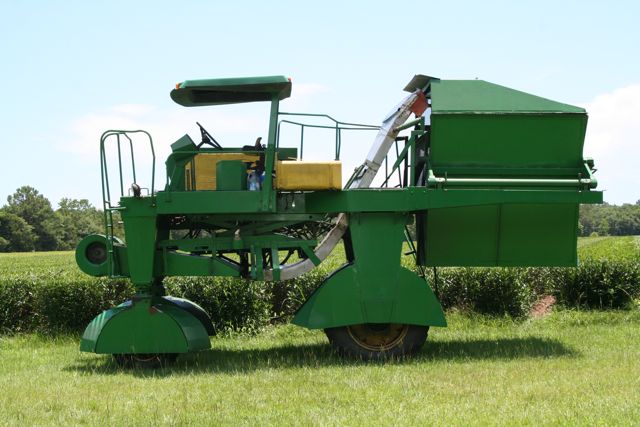
We were also all intrigued by the on-site invention, the Green Giant, a specialty harvester that takes the place of some 500-700 laborers. Without it, tea production, at least on this site, wouldn’t be profitable.
 Virtual Farmgirl
It's great to hear that you and your family went to the Charleston Tea Plantation and found it fascinating! (Bigelow purchased the plantation in 2003.) Thank you for visiting and for spreading the word about this national treasure!-Deb for Bigelow Tea
LikeLike
It's great to hear that you and your family went to the Charleston Tea Plantation and found it fascinating! (Bigelow purchased the plantation in 2003.) Thank you for visiting and for spreading the word about this national treasure!-Deb for Bigelow Tea
LikeLike